Table of contents
When a person fleeing war or political persecution finally reaches a place of relative safety, the next knock on the door is not always from local police, and sometimes it is not a knock at all, but a database hit. Across borders, airports, and police terminals, international alerts can turn an asylum application into a high-stakes legal emergency, and the consequences land on ordinary people: detention, family separation, and months of uncertainty while authorities decide whether an alert is legitimate or politically tainted.
“I was safe, then the screen turned red”
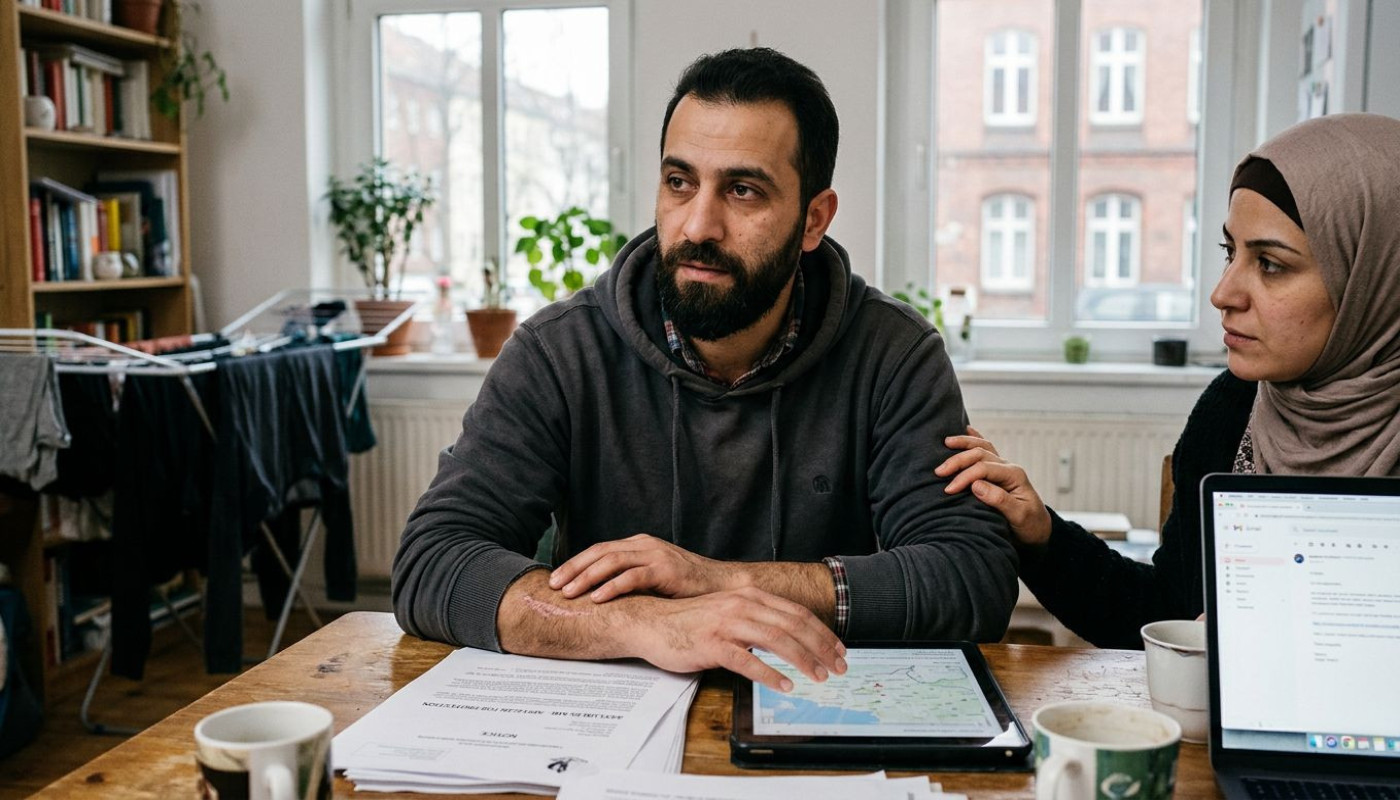
How does a life unravel in one minute? For Amir, a former municipal worker from the Middle East who says he refused to cooperate with a militia-linked local authority, the first months in Europe felt like an exhausted exhale, and then, at a routine document check, officers stepped aside, glanced at a terminal, and returned with a different tone. He recalls being told there was an international alert connected to his name, and within hours he was in a holding facility, trying to explain in a second language that the “case” back home was not a crime but retaliation.
Such moments sit at the intersection of asylum law and cross-border policing, and they are becoming more common as states rely on automated checks during border controls, residency procedures, and even traffic stops. The trigger is often an international request to locate or detain someone, typically framed as a criminal matter, even when the underlying dispute is political, commercial, or rooted in family conflict. For the person flagged, the immediate reality is brutally practical: phones taken, travel halted, and lawyers scrambling to obtain the underlying file, which may be opaque, incomplete, or inaccessible across jurisdictions.
Human rights groups have repeatedly warned that international alert systems can be abused to harass dissidents, journalists, businesspeople, and members of opposition movements, and while reforms have tightened review mechanisms, the gap between policy and street-level enforcement remains wide. A frontline officer seeing an alert may have seconds to decide what to do next, and the asylum seeker may have no time at all to prove that the request is politically motivated.
In Amir’s case, his supporters argue that the allegation was crafted to look ordinary, using a generic accusation of “fraud” tied to administrative paperwork, and that its real purpose was to force him back. He was eventually released pending review, but the psychological damage persisted: every appointment with immigration authorities felt like stepping onto thin ice, and every message from family carried a new warning about pressure back home.
When politics hides inside criminal charges
Can a charge be “criminal” and still be political? Lawyers working on these cases say yes, and they point to a pattern: allegations that mirror everyday offences, such as embezzlement, cybercrime, insult, extremism, or document fraud, yet appear in contexts where the individual is a known critic of a government, a whistleblower, or a participant in protests. The formal wording can matter more than the reality, because an alert’s credibility is often judged first by how it looks on paper, not by the political temperature of the country issuing it.
International policing cooperation is built on a core promise, that it should not be used for political, military, religious, or racial purposes, and this is not a minor technicality but a central safeguard. Yet in practice, the line is contested, and states that want someone returned may reach for offences that are easy to allege and hard to disprove quickly, especially when evidence sits in a foreign language, in a distant court, and under the control of the same authorities the asylum seeker fears.
For Nadiya, a blogger from Eastern Europe who documented corruption allegations against a regional governor, the alert emerged after she spoke at an event abroad. Friends told her that local investigators had opened a case over “financial irregularities” linked to a small NGO grant, and soon after, she was detained during transit. Her asylum claim, previously focused on threats and surveillance, suddenly became entangled with a question she never expected to answer: did she commit a financial crime, and if not, why did a foreign police system say she did?
This is where understanding the system matters, including the Interpol meaning in practical terms, and not merely as a famous acronym. Many members of the public assume it is a global police force issuing warrants, but the mechanics are different, and the difference can shape how a case is fought. Requests are initiated by national authorities, processed through international channels, and then acted upon by individual countries under their own laws, which means legal strategy often involves both challenging the underlying request and managing the domestic procedures triggered by it.
Even when a person is not ultimately extradited, the interim harm can be severe. Detention can last weeks or months, work authorization can be delayed, and family reunification can freeze, and the asylum seeker may be forced to relive the very political conflict they tried to escape, this time through legal filings rather than street harassment.
Inside detention: the clock runs differently
What does time feel like when your life is “pending”? People caught by international alerts describe detention as a distorted calendar, where days are filled with administrative steps that seem both urgent and inexplicable. There is often a first hearing on custody, then requests for documents, then a waiting game for responses from abroad, and each delay can be justified as procedure while the person behind the file loses job offers, housing opportunities, and the fragile stability that asylum systems are supposed to provide.
Some countries treat certain alerts as strong indicators of risk, and that can influence bail decisions, reporting obligations, and travel restrictions. In practical terms, an asylum seeker can be placed under strict conditions even when the underlying case has not been tested in an open court, and even when the person claims that the requesting state has a history of unfair trials, coerced confessions, or politicized prosecutions. The result is a paradox: the individual is asked to trust a process they fear, while being judged through the lens of a foreign accusation.
Legal practitioners say the early hours are crucial, because misunderstandings can calcify into official records. If a detainee signs a statement without a proper interpreter, or if an initial police report frames the matter as straightforward criminality, it may take months to correct. Consular contacts can be limited, access to case files can be partial, and the asylum procedure may continue on a separate track, creating two parallel narratives about the same person, one as a protection seeker, another as a suspect.
Beyond law, there is the intimate cost. Parents miss school meetings and medical appointments, partners carry the burden of proving residence and income alone, and children absorb the anxiety without understanding the language of extradition. Several NGOs working in European detention settings report that people flagged by international alerts frequently present acute stress symptoms, insomnia, and fear of deportation, and they often struggle to trust any uniformed official afterward, even those assigned to assess their asylum claim.
For some, detention is only the beginning. Even after release, periodic reporting to police can become a ritual of dread, and routine travel for work or family emergencies becomes impossible, because any crossing of borders could trigger a new stop. Safety, in other words, becomes conditional.
Clearing a name: slow paperwork, real stakes
Can an alert be removed quickly? Sometimes, but rarely. The path to challenge an international alert typically involves assembling evidence that the request is unfounded or abusive, documenting political context, and engaging with the relevant oversight channels and domestic courts, and each step depends on access to documents that may be difficult to obtain. The requesting state may provide minimal details, citing an ongoing investigation, and the person targeted may be asked to prove a negative, that they did not do what is alleged, in a system that presumes the request has at least some legitimacy.
Where safeguards work, they can be decisive. Oversight bodies have, in past years, strengthened reviews of certain categories of cases, including those involving refugees and recognized political opponents, and the principle of non-refoulement remains a legal anchor in asylum systems. Yet the outcome often hinges on careful lawyering and credible documentation, including prior arrests, court decisions, media reports, expert country analysis, and proof of the individual’s political profile. In short, it is investigative work as much as legal argument, and it must be done under pressure.
For asylum seekers, the complexity collides with poverty. Many arrive with limited resources, and the sudden need for specialized cross-border legal help can be financially devastating. Legal aid schemes vary widely, and even when available, they may not cover the full scope of transnational work, such as certified translations, expert opinions, or hearings tied to extradition. The longer a case drags on, the more likely it is that the person’s life stalls: employers hesitate, landlords refuse, and even community ties can fray under the stigma of an unresolved “international alert.”
Still, outcomes are not predetermined. Lawyers point to cases where alerts were challenged successfully, where courts refused extradition due to fair-trial risks, and where asylum protection ultimately prevailed. The key, they say, is speed, documentation, and a disciplined narrative that links the alert to a pattern of persecution, because authorities reviewing an alert want specifics, timelines, and corroboration, not only fear.
What to do when an alert surfaces
If an asylum seeker learns that an international alert may exist, practical steps matter immediately: ask for legal counsel, request an interpreter, and avoid signing documents that are not fully understood. Collect basic records early, including passports, prior court papers, arrest warrants, and evidence of political activity, and inform the asylum caseworker of any detention or extradition procedure, because parallel tracks can otherwise produce conflicting findings.
Budget planning is rarely discussed, yet it is central. Costs can include translations, certified copies, and expert reports, and families should ask in writing what legal aid covers and what it does not, and whether NGOs can help with documentation. In some countries, assistance schemes exist for detainees or asylum applicants, and early referral can prevent missed deadlines. For appointments, book as soon as possible, because the first hearing may arrive before the file does, and preparation time is often the only leverage a detainee has.
On the same subject

Silenced By Borders? How Defense Lawyers Tackle Interpol Cases

Why Mobility Isn't Just About Moving—it's About Belonging

Transparency Tests: Are Investment Programs Serious About Eligibility?
How Post-brexit Supply Chains Quietly Reshaped European Customs Rules

What Delays In Registry Updates Reveal About Corporate Transparency

Exploring The Benefits Of Offshore Company Formation For Non-Residents

Seasonal Deals And Offers At Hotels In Paris

Exploring Effective Online Tools For Nonprofit Fundraising Events

Rediscovering the Forgotten Ancient Languages
